
Look Up Toyota Part Numbers
Toyota Part Number Lookup Tool for VIN Search and Catalog Fitment
Locating exact component blueprints within our digital archive requires absolute mechanical tracking precision. Whether you are executing a routine maintenance task on a fuel-efficient hybrid or managing a complex chassis repair on a hard-working truck platform, identifying components by general description alone introduces significant error margins.
The integrated Toyota part number lookup engine at Toyota San Diego connects directly to active factory catalog databases, giving you instant access to real-time build specifications, design updates, and authentic components mapped directly to your vehicle's original factory configuration.
Utilizing a structural part identification framework based on exact vehicle specifications is the single most effective way to eliminate ordering errors, reduce shipping return overhead, and protect your vehicle. This comprehensive approach ensures that every replacement item satisfies the original factory specifications required to preserve your vehicle's safety metrics and long-term driving characteristics.
Two High-Precision Search Channels: Keyword Fields and VIN Tools
To accommodate whatever documentation or vehicle data you have on hand, our digital catalog portal is constructed with a split layout. When visiting our interface, you can route your inventory search through two dedicated processing nodes designed to optimize component tracking:
- Search By Keyword (Fastest Way to Search): Positioned on the left side of our interface screen, this entry input is ideal if you have a component sequence ready. It allows you to enter alphanumeric strings taken directly from a stamped factory casing, a mechanic's repair estimate, or a previous maintenance invoice to pull up real-time inventory status instantly.
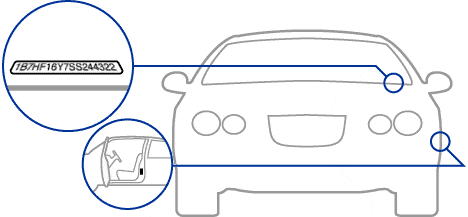
- Search By VIN (Ensure Part Fitment): Positioned on the right side of our lookup block, this system provides absolute validation. Entering your unique 17-character vehicle identification sequence completely handles your search parameters, analyzing factory options packages and specific build variations to isolate compatible components while hiding non-compatible items automatically.
Decoding the Standardized 10-Digit Toyota Component Syntax
Toyota utilizes a highly consistent alphanumeric syntax to catalog every fastener, filter, and module across its vehicle families. Most genuine items utilize a clear ten-digit arrangement, typically formatted with a central hyphen separating two core blocks. Understanding this clear structure helps you decode the specific system tracking assigned to your old hardware:
| Component Block Structure | String Position | Operational Mechanical Function |
|---|---|---|
| System Prefix Code | First 5 Digits | Establishes the primary automotive system or part category family (for example, 90915 always dictates spin-on canister oil filters, while 16400 isolates cooling radiators). |
| Design and Application Suffix | Second 5 Digits | Pinpoints the specific chassis geometry, engine displacement variation, or emissions equipment setup required for that build loop. |
| Color or Finish Suffix | Optional Final Digits | Specifies exact interior leather trim dye matches or factory paint codes for exterior side mirrors and bumper trim packages. |
This predictable syntax makes cross-referencing highly effective. If an entry-level component code has been retired due to manufacturing updates or chemical friction changes, our smart lookup utility automatically traces the update history.
It bridges the data gap instantly to guide you directly to the latest approved version, ensuring you always receive the newest design updates available.
Navigating Part Name Codes within Interactive Diagrams
When you use our year index tool to search across model eras spanning from the 1980s up to 2026 versions, you will often browse through detailed technical schematics. When reviewing these factory drawings, the numbers assigned to components are not the actual ten-digit part numbers. Instead, they are shorthand design tags known as Part Name Codes (PNC).
For example, an active pressure sensor might be labeled as a short code like 89421R on a schematic blueprint display. This code acts as a structural placeholder within that system drawing layout. Clicking on a PNC label inside our interactive catalog system commands the database to cross-examine that location with your selected vehicle parameters.
The system automatically handles the conversion to generate the full, distinct part number required for your specific trim level, transmission configuration, and powerplant setup. This layer protects your repair timeline, allowing you to source small clips, hidden gaskets, and internal brackets without tracking down paper service manuals.
Protecting Factory Reliability with San Diego Performance Specs
Your vehicle operates as a closely synchronized mechanical and electronic ecosystem, where every filter weight, sensor pin layout, and brake pad friction compound is balanced to sustain strict payload capacities, fuel economy metrics, and crash-test safety ratings.
Settling for cheap, loose-tolerance aftermarket substitutes compromises this engineering balance, frequently causing dashboard diagnostic trouble codes, premature component wear, and unpredicted system faults. By matching your numbers directly through the factory-authorized lookup utility at Toyota San Diego, you ensure that every individual filter, sensor, and mechanical assembly maintains uncompromised structural integrity for the road ahead.